The Jacobite Steam Train Out of Season: October to May
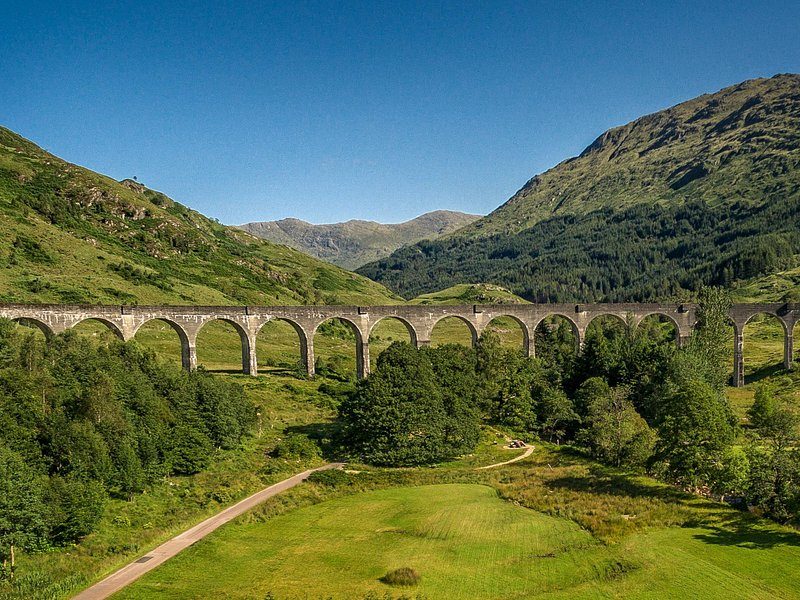
The Jacobite is a summer train. In 2026 it runs from 1 June to 23 October, and for the rest of the year the steam engine is gone from the line. The viaduct is still there, and so are ordinary trains. This guide covers what you can and cannot do at Glenfinnan from late October to May, and how to plan for the next season.
When does the Jacobite stop running?
In 2026 the afternoon train stops on Friday 25 September, and the morning train on Friday 23 October. After that there is no Jacobite until the next season. There is no winter service.
The start moves from year to year. The 2025 season began on 5 May, while the 2026 season began on 1 June, a month later. So May is not a safe bet, and neither is late October. The full 2026 dates are on the 2026 Jacobite season page.
What still crosses the viaduct in winter?
ScotRail's service trains. They run on the same line all year, between Glasgow Queen Street, Fort William and Mallaig. As of December 2025, the pattern was three trains a day each way between Mallaig and Glasgow, and one more each way between Mallaig and Fort William.
They are modern passenger trains, not steam. Watching one cross is not the photograph on the postcards, but it is a train on the arches. Riding one gives you the same curve over Loch Shiel from the window. The line itself is described in the route, station by station.
Do Glenfinnan tours run out of season?
Some do, and they say so. The private day from Glasgow states that the Jacobite does not run between 25 October and 27 March, and that it still visits the viaduct in those months. It is priced per group of up to four, at $955.
The three-day Skye trip from Edinburgh sells its train option only on April to October departures, so its other departures run without the train. The four-day trip rides the Jacobite in summer only. The Charlotte Square viaduct day describes the train as seasonal and a sighting as not guaranteed.
For any other tour, check its dates before you book. One rider on a Gray Line day in April 2026 found the train not running at all.
What is open at Glenfinnan?
The grounds are open every day, according to the National Trust for Scotland. The visitor centre, the monument climb and the two cafés keep their own hours, and the Viaduct View Café opens from spring to autumn only.
So check the Trust's opening times before a winter visit. Entry costs £5 for an adult and £4 for a child, and the car park costs £5. Members of the Trust go free. The viewpoint and the monument are covered in our Glenfinnan Viaduct page.
What else is there at Glenfinnan when the train is not running?
More than the viaduct. The Glenfinnan Monument stands at the head of Loch Shiel, an 18 m tower raised in 1815 to the clansmen who died for the Jacobite cause. It marks the place where Prince Charles Edward Stuart raised his standard on 19 August 1745, and where 1,200 Highlanders gathered to follow him, eight months before Culloden.
The National Trust for Scotland's visitor centre tells that story in an exhibition in English and Gaelic, with a model of the 1745 gathering. You can climb the monument for the view down the loch at set times. The Trust also points visitors to the church of St Mary and St Finnan, the historic station and its museum, and walks by the river, the loch and the hills.
The viaduct itself needs no train to be worth the walk. It is 21 concrete arches on a curve, 416 yards long, opened in 1901 and listed Category A. Historic Environment Scotland calls it the longest concrete viaduct in Scotland.
What is the weather like from October to May?
Wet and cool, and wettest in midwinter. The nearest Met Office stations with long records are Tulloch Bridge, in an inland glen near Fort William, and Skye: Lusa, on the coast opposite Mallaig. These are their 1991-2020 averages.
| Month | The Jacobite | Rain, Tulloch Bridge | Rain days | Frost nights | Rain, Skye: Lusa |
|---|---|---|---|---|---|
| October | Morning train to 23 October | 191 mm | 20 | 4 | 218 mm |
| November | Not running | 203 mm | 20 | 9 | 210 mm |
| December | Not running | 223 mm | 19 | 14 | 241 mm |
| January | Not running | 250 mm | 20 | 13 | 241 mm |
| February | Not running | 187 mm | 18 | 12 | 185 mm |
| March | Not running | 154 mm | 18 | 11 | 173 mm |
| April | Not running | 103 mm | 15 | 7 | 114 mm |
| May | Not running in 2026 | 95 mm | 15 | 4 | 111 mm |
January is the wettest month inland, at 250 mm. Frost comes on about 14 nights in December and 13 in January at Tulloch Bridge, and far fewer on the coast.
The coast is milder but wetter. At Skye: Lusa the average January high is 7.4 °C against 5.7 °C inland, and frost comes on about 7 nights. It rains there on 21 days in an average January, so pack a waterproof whatever the forecast says. Every month is on the weather by month page.
Can you ride a train over the viaduct in winter?
Yes, on ScotRail. Take the train from Fort William towards Mallaig, and it crosses the Glenfinnan Viaduct on the way, as the Jacobite does. You book it like any other ScotRail journey, and National Rail Enquiries has the times.
This is the cheapest way to cross the viaduct in any season. It is not a heritage train, there is no steam and no buffet car, but the view from the window is the same.
What about private tours in the off-season?
The private day from Glasgow is the one that promises the viaduct in winter. It collects you from your Glasgow hotel, guest house or Airbnb at 8:30am. It is for a party of up to four.
The private days from Edinburgh do not say how they run in winter, so ask the operator before you book. Private options from both cities are compared on the Jacobite from Glasgow.
Are May and October worth the gamble?
October, yes, early in the month. The morning train runs until 23 October in 2026, though the afternoon train has stopped. Rain climbs fast: Tulloch Bridge gets 191 mm in October against 130 mm in September.
May, only when the season is published. In 2025 the train ran from 5 May, and in 2026 not until 1 June. May is drier than any winter month, so it suits a viaduct visit even when the train is not running.
How do you plan for next season?
Wait for the dates. No 2027 season or fares had been published at the time of writing. The 2026 fares came out in December 2025, so watch for the next season from late in the year.
West Coast Railways lets you register for updates on its website. Once the dates are out, book early: there are not many seats. The fares and refund rules are set out in Jacobite ticket prices, direct and on tours.
Frequently asked questions
Does the Jacobite run in winter?
Can you ride a train over the Glenfinnan Viaduct in winter?
Do Glenfinnan tours run in winter?
When does the Jacobite Steam Train run in 2026?
When will the 2027 Jacobite season be announced?
Do other trains cross the Glenfinnan Viaduct?
How much does parking cost at Glenfinnan?
Where these facts come from
The train, the fares and the season come from the official pages below. Everything about a tour comes from its own booking page. Check both before you travel, because both change.
- West Coast Railways: Jacobite timetables 2026
- West Coast Railways: Jacobite 2026 fare prices
- Wikipedia: West Highland Line
- National Trust for Scotland: Glenfinnan Monument
- Historic Environment Scotland: Glenfinnan Viaduct, listed building LB310
- Met Office: Tulloch Bridge climate averages 1991-2020
- Met Office: Skye: Lusa climate averages 1991-2020
- West Coast Railways: register for Jacobite updates
- National Rail Enquiries
Tours to weigh up either side of the season
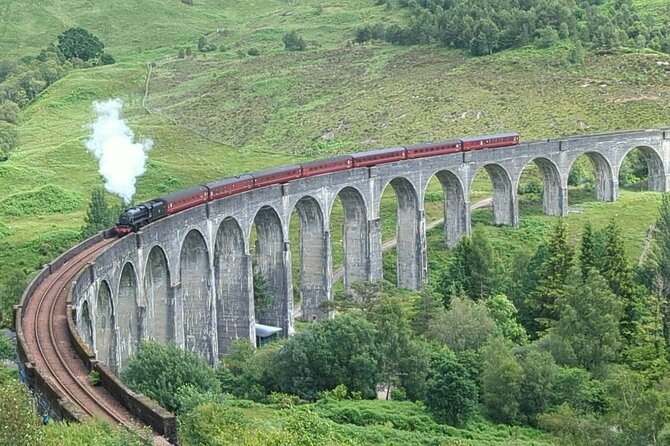
Private Harry Potter, Glenfinnan Viaduct, Highlands tour Glasgow
The one day from Glasgow: collected at 8:30am, 90 minutes at the viaduct, priced per group of up to 4. It watches the train.
From $955 per group, up to 4
Check Availability
Edinburgh: Isle of Skye & Optional Jacobite Train 3-Day Tour
Two nights on the way to Skye with Scottish breakfasts. The train ride comes only with the dearer option.
From $487 per person
Check Availability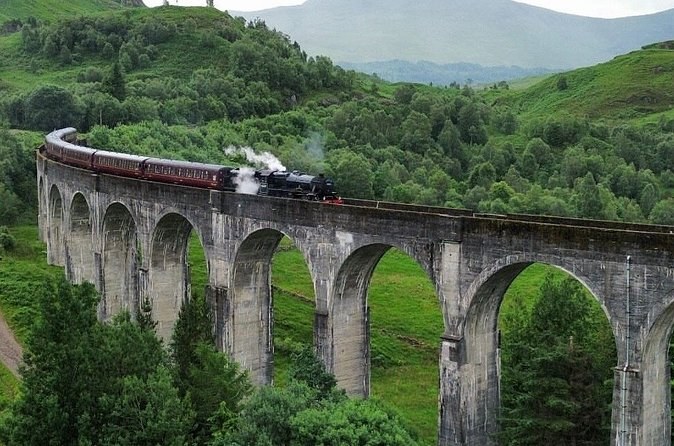
Edinburgh: Glenfinnan Viaduct, Glencoe & Fort William
The most affordable way to see the train cross: 90 minutes at the viaduct and Loch Shiel, with Glencoe on the way. You do not board.
From $60 per person
Check AvailabilityNext: Planning for summer instead? Every tour for the 2026 season sits side by side on Jacobite Steam Train Tours.